The short answer
Golf course living appeals to more than regular golfers. The draw is often space, open outlook, mature landscape and a calmer daily rhythm, with golf as part of the setting rather than the whole reason for buying.
For buyers, the decision rarely comes down to whether a home is near a course. It comes down to which kind of golf setting suits the way the home will actually be used.
None of these points is automatic. The right setting depends on how often you will visit, who will use the home and how much of your week you want the course to shape.
Why the fairway matters
The view is the easiest part of golf living to photograph, and the least useful part to buy on by itself.
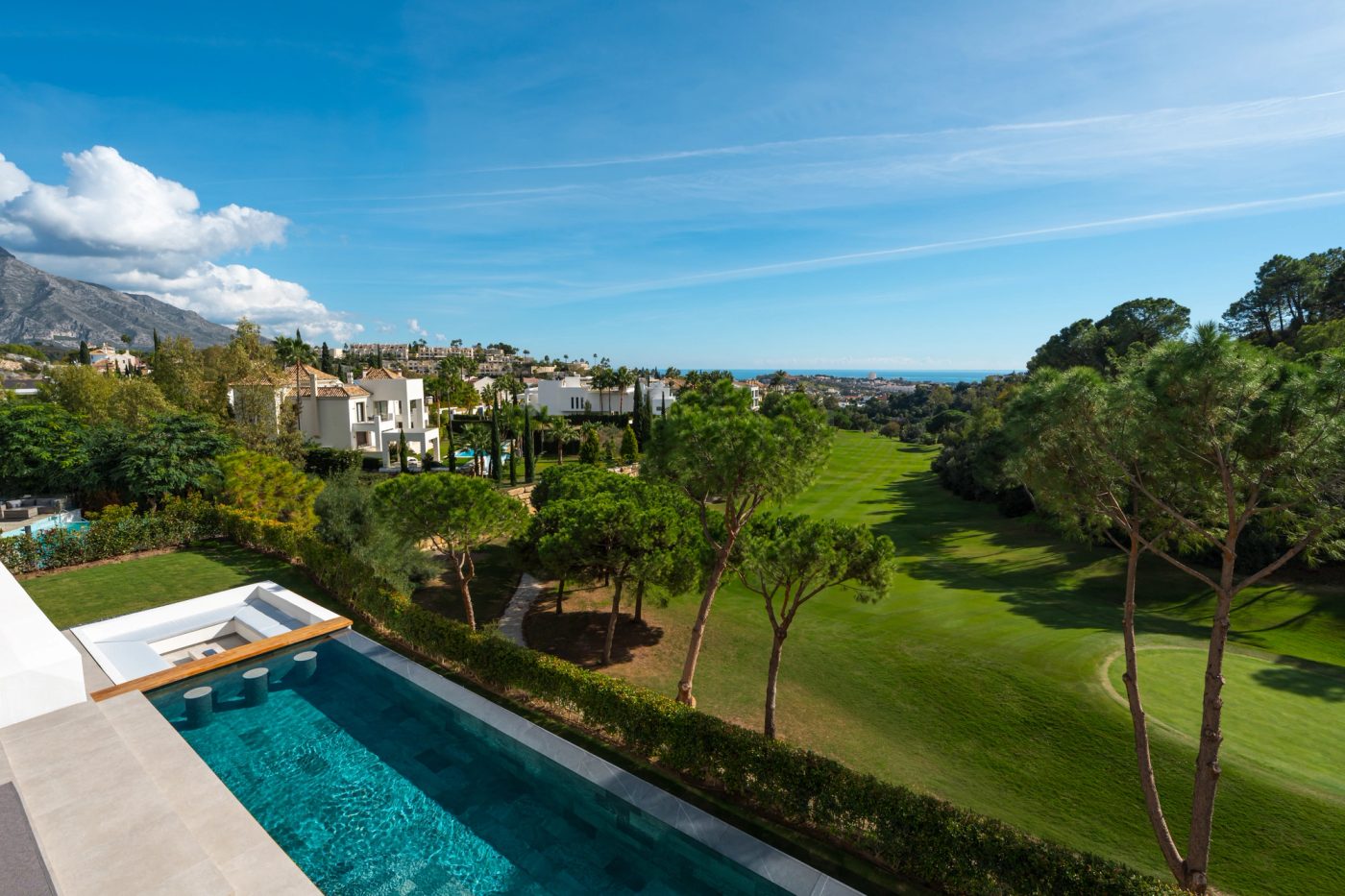
What tends to matter for owners is what the course does to the space around the home. A fairway can bring long sightlines, mature planting, green outlook and a sense of borrowed landscape beyond the garden. It creates room to breathe. That is why many owners who rarely play still choose these settings.
Golf-front living works best when the view is matched by privacy, orientation and outdoor space that can be used comfortably throughout the year.
The same landscape can also work against a home if the details are wrong. A terrace that faces the wrong way may be warm at the wrong hours. A plot set low beside a green can feel more exposed than one set slightly back or above. A position beside a busy hole may bring more passing play than a quieter stretch of the course.
So the question is not simply whether the home has a fairway view. It is whether the fairway improves how the home is lived in.
Compare the settings
Fairway-side suits buyers who want outlook and open space as the defining feature of the home, and who will spend enough time there to enjoy it. It works best when the layout, orientation and terrace depth match the position, rather than simply pointing at it.
Resort living suits buyers who want facilities, services or management support close by. It can work especially well for shorter stays, regular trips or owners who want the home cared for between visits. The trade-off is that community rules, service charges and shared standards need to fit the way you want to live.
Near-golf living suits buyers who want more space, privacy or budget flexibility, and who would rather choose between several courses than live beside one. It works best where the surrounding town, restaurants, services and travel routes support the way the family uses the home.
Check the position
Golf-front homes reward careful inspection. Before a fairway-side property earns a place on the shortlist, look at the details that determine daily comfort.
Start with orientation. Where does the sun sit over the main terrace at the hours you will use it? Morning and late-afternoon light can make the same outlook feel completely different.
Then consider privacy. Can the terrace, pool and principal bedroom be used comfortably when play is passing? Boundary planting, elevation and set-back all change the answer.
- Orientation
- Light, shade, heat and exposure affect whether the view can be enjoyed comfortably.
- Privacy
- The best homes feel connected to the course without making terraces, pools or bedrooms feel overlooked.
- Outdoor living
- Terraces, gardens, pools and dining areas turn the setting into daily value when they are properly planned.
Look at proximity to play as well. Which hole sits behind the home, and how close is the line of play to the garden or terrace? A broad view across the course may feel very different from a position tight to a tee, green or buggy route.
Ask about course maintenance too. Grounds work is part of living beside a course and often happens early. Understanding routines, machinery access and maintenance areas gives a more practical picture of the setting.
Look beyond golf
Once the setting is understood, the comparison becomes about place as much as property.
Think about an ordinary week that includes no golf at all. Where will you shop, eat, walk, meet friends, see a doctor or spend time with visiting family? How lively is the area outside peak season?
- Daily services
- Restaurants and social life
- Beach, town and airport access
- Family use and year-round activity
Established golf areas in Spain and Portugal offer different patterns, often within a short distance of each other. That is why two homes with similar specifications can produce completely different lives.
Travel belongs in the same comparison. Flight routes from your home city, airport transfer time and the final drive all shape how often you will realistically use the property. A home that reads marginally better on paper can lose to an easier journey.
Own it comfortably
Golf settings carry a particular ownership profile, and it is worth being clear-eyed about it early.
Gardens and outdoor space are often the point of these homes, and they need reliable care when the owner is away. Managed communities can reduce that burden, but they bring rules, charges and shared decision-making. Villas usually offer more privacy and space, and more to look after.
Golf-home ownership checks
- Community fees
- Check before offer Confirm what is included and whether any resort or service charges apply.
- Maintenance
- Plan while away Villas, pools, gardens and terraces may need regular care between visits.
- Golf access
- Verify in writing Membership, tee times and owner privileges are not automatic.
- Letting rules
- Confirm locally Community and local rules can affect whether short-term letting is possible.
- Legal and tax
- Take advice Independent professional advice should confirm obligations before completion.
If occasional letting forms part of your thinking, treat it as an early due-diligence question rather than a reason to buy. Community regulations, local rules and ownership structures vary by location and can change. A local lawyer and the relevant community or management body should check what is possible for the specific property before any income assumption affects the shortlist.
Legal, tax and residency questions should be handled with independent professional advice in the relevant country. They are too personal, and too important, to settle through general guidance or a sales conversation.
The GHI view
The best golf homes are not simply the closest to the course. They are the homes where the setting makes the property better to live in: the light, the privacy, the terrace, the sense of space and the rhythm of an ordinary week.
A course can lift a property considerably. It cannot correct a layout that does not suit how you will use the home, a terrace that cannot be used comfortably, or a location that makes the journey too much effort to repeat.
FAQ
Is golf course living only worthwhile for regular golfers?
No. Many owners choose these settings for the open outlook, mature landscape, privacy and calmer pace, and play only occasionally or not at all. Golf shapes the environment whether or not you use the course regularly.
Does owning a golf property include club membership?
Not automatically. Membership, playing rights, preferential tee times and club privileges are separate arrangements that vary by club and by property. Ask what is included, on what terms and for how long, and get the answer in writing before relying on it.
Is frontline golf always the strongest position?
No. A fairway-side home can be exceptional, but the position needs to be matched by orientation, privacy, terrace depth and layout. Some buyers find a near-golf home with more space and privacy suits them better, and it may offer more budget flexibility.
What is the difference between resort and near-golf living?
A resort home usually sits within a managed community with services and facilities close by, which can suit shorter or more frequent visits and reduce effort between stays. A near-golf home often offers more space, privacy and choice of courses, but usually requires a car and more self-management.
What should I check about privacy beside a course?
Look at where the line of play runs relative to the boundary, how the plot sits in elevation, what planting screens the terrace and pool, and how neighbouring homes are positioned. If possible, view at the time of day you would actually use the outdoor space.
Are there noise or activity considerations beside a golf course?
Course maintenance often begins early and passing play is part of the setting. Neither is a problem for many owners, but both are worth understanding for the specific hole, boundary and terrace position rather than the course in general.
What ongoing costs should I expect?
Ask for a clear picture of community fees and what they cover, garden and pool maintenance, utilities, insurance, any resort or service charges, and the cost of caring for the home between visits. These vary by property and community and should be checked for the specific home.